There is a gap between how restaurant owners think about marketing and how diners actually find restaurants. Owners still think about billboards, flyers, and "getting on the food blog." Diners pick up their phone, type two or three words into Google Maps, and pick from whatever surfaces in the top three results. Everything else is noise.
If you own or operate an independent restaurant and you are not ranking in the local map pack for terms your future customers type into their phone on a Friday at 6:45 p.m., you are losing covers every night. Not a vague abstraction of "missed opportunities", specific tables, specific people who were going to spend seventy-five dollars on dinner and drinks, who walked into a competitor instead because your restaurant wasn't the first option Google suggested.
This is the playbook we use at Innovative Group when we take on a restaurant client. It is not theoretical. It is what moved 20Twenty Willow Glen from an invisible Google listing to ninety-five-plus first-page rankings and consistent Friday-night waitlists. If you want the short version: own your Google Business Profile, put your neighborhood in your content, earn reviews systematically, put real photography on real pages, and make your site fast on a phone. The long version, the one that actually gets results, is below.
Why Restaurant Local SEO Is Different
Most SEO advice is written for SaaS companies and e-commerce brands. It assumes a buyer who is researching a decision over days or weeks, reading multiple long-form articles, comparing vendors on a spreadsheet. Restaurant intent is nothing like that.
A diner's decision window is typically under five minutes. They are standing on a sidewalk or sitting in a car, hungry, making a choice among whatever Google shows them in the map pack. They will not read a blog post. They will not compare your menu to a competitor's menu. They will look at four things, in this order: your star rating, the number of reviews, your photos, and whether you are open right now. If those four signals tell them "this place is worth walking to," they will walk. If they don't, someone else gets their money.
That simple reality should reshape how you think about every piece of content on your website, every photo you upload, and every review request you make. You are not building a content marketing funnel. You are trying to win the four-signal glance, then make sure the website they hit after clicking loads fast, reads clean, and lets them book a table in two taps.
The Four Pillars of Restaurant Local SEO in 2026
There are only four things that meaningfully drive results for a restaurant in local search. Focus on these ruthlessly. Everything else is either a derivative of these four or a waste of time for a restaurant your size.
1. Google Business Profile (GBP)
Your Google Business Profile is not a directory listing. It is your most important web page, full stop. Ninety-something percent of your first impressions are going to happen inside Google, in Maps, in the three-pack, in the knowledge panel on the right side of a branded search. Your website is the second impression. GBP is the first.
Claim it. Verify it. Fill out every single field. Category matters, pick your primary category with care, because it is the single biggest ranking factor inside Maps. "Restaurant" is too broad. "Italian Restaurant" or "Neapolitan Pizza Restaurant" or "Contemporary American Restaurant" tells Google who your competitors are and who your diners are. Add every secondary category that honestly applies. Add your menu, add your hours, add your holiday hours, add your dining options, add accessibility attributes. Add real photos, not stock, and upload new ones weekly. Respond to every review, every one, positive and negative. Post updates. Use the offers and events features.
If you are doing one thing this week, do this. A fully optimized, actively maintained GBP will out-rank a lazy GBP every time, regardless of how much money is behind the lazy one.
2. A Fast, Mobile-First Website with Real Schema
Seventy-plus percent of your restaurant website traffic is on a phone. If your site takes more than two and a half seconds to load the menu on a mid-range Android on a 4G connection, you are bleeding covers. Core Web Vitals are not an SEO nice-to-have anymore. They are a ranking factor that Google measures on every single page view, aggregates, and uses to decide whether to show you.
Beyond speed, the site needs structured data. At minimum: Restaurant schema on your homepage, Menu schema on your menu page, Event schema on anything happening in the restaurant, FAQPage schema on your FAQ, and LocalBusiness with full NAP (name, address, phone) everywhere. This is how Google understands your site well enough to surface it in rich results. Most restaurant websites have none of this. Adding it is a one-afternoon job for a developer who knows what they are doing and moves rankings within two weeks.
3. Neighborhood-Anchored Content
You are not competing with every Italian restaurant in America. You are competing with the six Italian restaurants within fifteen minutes of your front door. Your content strategy should reflect that exact geography.
Mention your neighborhood, your cross streets, and nearby landmarks naturally throughout your site. Write a page about "Italian dinner in Willow Glen", not as a keyword stuffing exercise, but as real content a real diner would want to read when they are trying to pick a place. Publish actual content about the neighborhood you're in: when the farmer's market is, which theater is nearby, what time the high school football games get out. This is the content that earns you entity-level association with the neighborhood in Google's eyes, and it is nearly invisible to competitors because they don't know to do it.
Don't try to rank nationally. Don't try to rank for "best Italian restaurant" with no geography attached. You will never win, and more importantly, none of that traffic becomes a diner. Every piece of content you publish should either deepen your association with your neighborhood or answer a specific question a diner in your neighborhood is actually asking.
4. Reviews (Velocity and Response)
Reviews are a ranking factor and a conversion factor at the same time. Google looks at total review count, average rating, review velocity (how often new reviews come in), review recency (how recent the last one was), and whether the business responds. Diners look at the same signals and decide whether to walk in.
Build a system. Not a sign that says "review us on Google," which does almost nothing. A system: a specific server or manager who asks specific guests at a specific moment, typically when the entree has just been cleared and the guest has said something positive, and hands them a card with a QR code that opens the review page pre-populated. This one workflow, executed nightly, will get you more real reviews in sixty days than most restaurants collect in a year. Respond to every review within forty-eight hours in the owner's voice. Never argue with a negative review in public. Acknowledge, apologize, invite them to talk privately, move on.
On-Page SEO Fundamentals for Restaurants
Once the four pillars are in place, on-page fundamentals finish the job. These are the specifics we check on every restaurant audit.
Title tags and meta descriptions. Every page should have a unique title tag under 60 characters and a meta description under 155. The title should include your restaurant name, what kind of restaurant you are, and your neighborhood: "20Twenty Willow Glen | Italian Restaurant in Willow Glen, San Jose." Not creative. Not clever. Literal.
Header hierarchy. One per page. Use and to organize content. Put the keyword you want to rank for in the h1 or the first h2 if it fits naturally. Don't stuff it.
Image optimization. Every photo should have descriptive alt text ("wood-fired margherita pizza at 20Twenty Willow Glen" not "IMG_4231"). Compress every image. A 4-megapixel hero photo exported straight from a phone is a 4MB file that will murder your Core Web Vitals. Compress it to under 200KB and use modern formats (WebP or AVIF with a JPG fallback).
Internal linking. Link from your homepage to your menu, to your reservations page, to your about page, and to any neighborhood content you have. Link from blog posts back to the menu and to reservations. Every internal link is a vote for what pages matter most.
Canonical tags. Every page needs a self-referential canonical. Many restaurant websites generate duplicate URLs (with and without trailing slashes, with tracking parameters, in multiple language versions) and end up competing with themselves in the index.
Sitemap and robots. A current XML sitemap submitted to Google Search Console. A clean robots.txt. Both simple, both frequently broken on restaurant sites built by whoever was cheapest in 2019.
Local Citations and NAP Consistency
Citations, mentions of your name, address, and phone number on third-party sites, matter less than they did five years ago, but inconsistency still hurts. If Yelp, TripAdvisor, OpenTable, Resy, and your own website have four different versions of your phone number or three different addresses, Google gets confused and your rankings suffer.
The fix is boring and important: pick exactly one version of your NAP and enforce it everywhere. Use a citation audit tool to find every listing of your business and fix the ones that disagree. Focus on the top twenty or thirty platforms (Yelp, TripAdvisor, OpenTable, Resy, Apple Maps, Bing Places, Facebook, and your local newspaper or neighborhood directory). Don't pay for a service to list you on eight hundred directories, most are spam, and Google knows it.
Photography as an SEO Asset
Most restaurant websites fail on photos in two ways: the photos are bad, and the photos are heavy. Fix both.
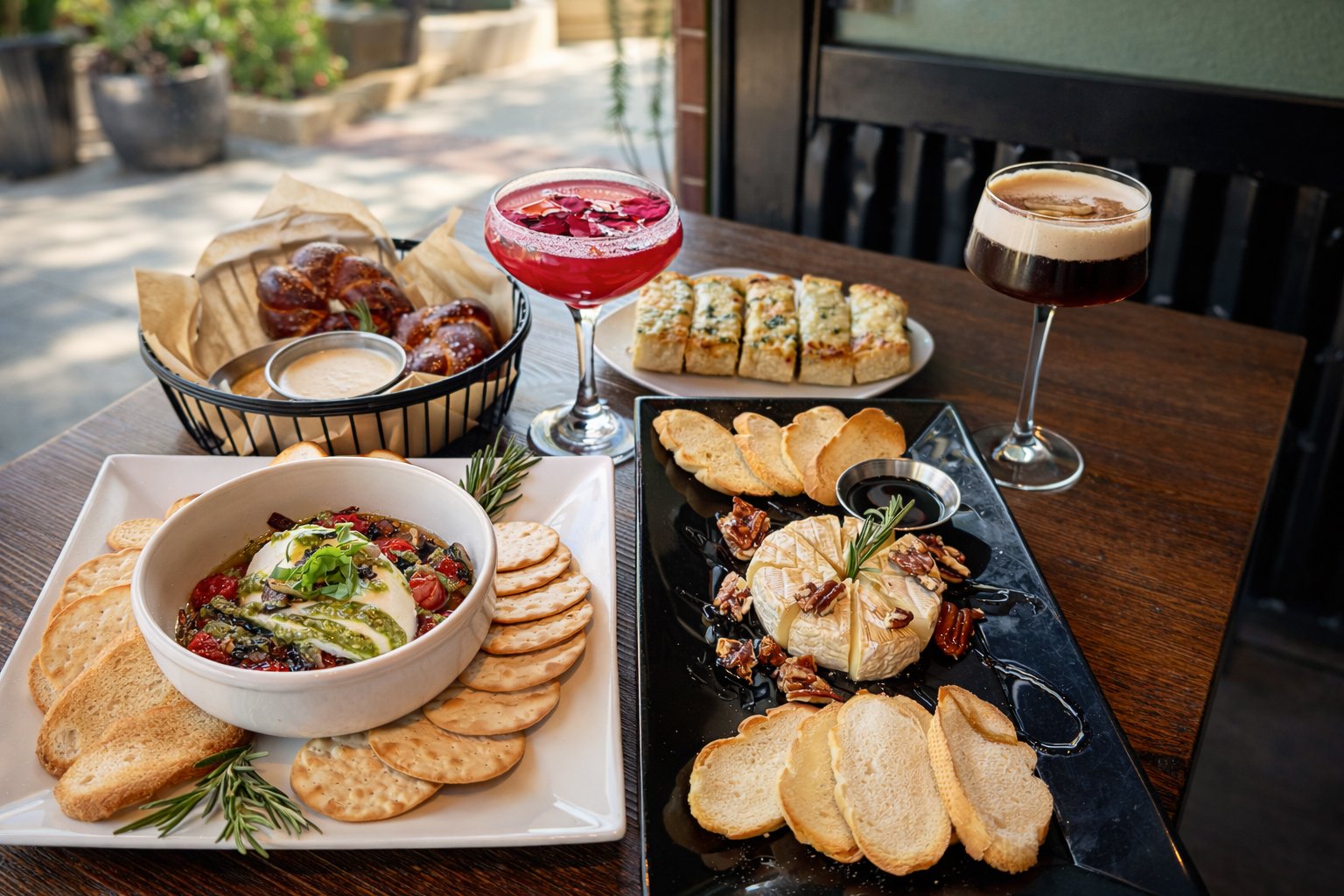
Bad food photography repels diners. Professional food photography, actual lighting, actual styling, actual art direction, is one of the highest-ROI investments a restaurant can make. A single half-day shoot produces fifty to a hundred images that feed your website, your GBP, your Instagram, your Google Posts, your menu, and your print collateral for the next twelve months. The difference in booking rate between a restaurant with editorial photography and a restaurant with phone pictures is something you can feel in the dining room every Saturday.
Heavy photos, as noted above, murder your site speed. After the shoot, compress ruthlessly. Serve hero images at no more than 1600 pixels wide and under 250KB. Serve menu item thumbnails at 600 pixels wide and under 60KB. Use loading="lazy" on everything below the fold. Use modern image formats.
Schema Markup Every Restaurant Should Ship
Schema is how you tell Google specifically what your site is, in a language Google prefers. For a restaurant, the non-negotiables are:
- Restaurant on the homepage, with
servesCuisine,priceRange,address,telephone,openingHoursSpecification,acceptsReservations, andimage. - Menu on the menu page. Break out
hasMenuSectionfor each part of the menu (starters, mains, desserts, drinks), withhasMenuItemnodes for individual dishes. Include prices when appropriate. - Event for any recurring events (live music, happy hour, trivia, prix fixe nights). Events surface in rich results and get picked up by Google Events.
- FAQPage on an FAQ page or section. This earns expanded search results that take up more real estate on the results page.
- BreadcrumbList on every page. Small, cheap, improves how your URL looks in the results.
- AggregateRating if you pull reviews onto your own site, done carefully and only with real data.
Validate every schema block with Google's Rich Results Test before shipping. Broken schema is worse than no schema.
Measuring What Matters for Restaurants
Restaurants drown in vanity metrics. "Website visits" is a vanity metric. "Impressions on Google" is a vanity metric. The metrics that matter for a restaurant are the ones that show up on the reservation book and the POS.
Track these:
- Direction requests from GBP. This is a proxy for actual foot traffic. It is the single best digital metric a restaurant has.
- Phone calls from GBP. Important for takeout, catering inquiries, private events.
- Clicks to reservations from website. Track the click to OpenTable, Resy, or your reservation form as a conversion event.
- Branded search volume. Are more people Googling your restaurant by name month over month? If yes, your top-of-funnel presence is working.
- Map pack rank for your primary categories. Run a local rank tracker once a week from multiple points in your service radius.
- Review velocity and average rating. Trend lines, not point-in-time snapshots.
Ignore bounce rate. Ignore time on site unless it drops suddenly (which signals a technical problem). Ignore social media follower counts. None of them pay for prep cooks.
Common Restaurant SEO Mistakes to Avoid
Things we see on ninety percent of the restaurant audits we run:
- A PDF menu. Google cannot read a PDF the way it reads HTML. Your menu should be HTML, on its own page, with schema. If you also want to provide a PDF download, fine, but the primary menu must be crawlable.
- A slideshow or video background hero. Kills load time, distracts from the one thing the page needs to do (make someone book a table).
- A "Book Now" button that opens a third-party tool in the same tab. Opens in a new tab. Always.
- Multiple contradictory phone numbers across GBP, Yelp, the website header, the website footer, and the contact page. Pick one. Enforce it.
- A blog last updated in 2019. Either commit to maintaining it or remove it. A stale blog is a negative signal.
- Hidden hours. Your hours should be in the header, in the footer, and on every page. Diners check them often.
- No menu on the homepage above the fold. The number-one reason someone visits your website is to see the menu. Make it one click away.
- Autoplaying music. Still exists. Still a problem. Please stop.
A 30-Day Restaurant SEO Sprint
If you run a restaurant and you want a plan you can actually execute in the next thirty days, here is the one we give clients before a full engagement:
Week 1: Foundation. Claim and fully optimize your Google Business Profile. Fix every NAP inconsistency across your top twenty directories. Install Google Search Console and Google Analytics 4 if they aren't already there. Audit current Core Web Vitals.
Week 2: On-Page Cleanup. Rewrite title tags and meta descriptions for every page. Compress every image over 300KB. Fix header hierarchy. Add alt text to every image. Ship Restaurant and Menu schema.
Week 3: Content and Reviews. Publish one neighborhood-anchored page. Stand up a review-request workflow with QR cards and a specific trigger moment during service. Respond to every existing Google review.
Week 4: Measurement. Set up a local rank tracker. Define your KPI dashboard around direction requests, reservations clicks, branded search, and review velocity. Schedule monthly reviews.
Thirty days in, most restaurants see measurable movement in map pack rank, review velocity, and direction requests. Ninety days in, it starts showing up at the host stand.
When to Hire Help
You can run the thirty-day sprint yourself or with a tech-literate manager. You cannot run a sustained local SEO program yourself and also cook service Friday and Saturday night. At some point, if you want compounding results, you hire help.
Be careful who you hire. Most agencies that pitch "restaurant marketing" are running the same generic local SEO playbook they run for dentists and HVAC companies. Restaurants have a specific media model, a specific sales motion (walking in the door), and a specific content rhythm (the seasons, the menu, the kitchen). The agency you want is one that has actually worked inside hospitality and knows what a prep list looks like.
Whether it's us or someone else, the test is simple: ask them to show you three restaurant clients, the before-and-after rankings, the before-and-after review counts, and the before-and-after direction requests. If they can't show you that, they're not running a real program.
The Bottom Line
Restaurant local SEO in 2026 is not complicated. It is four pillars, GBP, a fast site with schema, neighborhood content, and a review system, executed with discipline, over months, by someone who actually cares about whether the tables are full on Saturday. The restaurants that do this win their neighborhood on Google. The restaurants that don't keep paying for billboards and wondering why nothing is working.
If you want to see what this looks like when it's all working together, look at what we did with 20Twenty Willow Glen same kitchen, same owners, entirely different business once Google could see them. If you want the playbook run for your restaurant, we offer a free local SEO audit that turns up the specific issues costing you covers and the specific fixes that will move your rank.