Not quite. Try again.
Amy and Keith have the passphrase. If you need it again, email chris@innovativedesign.us.
This is what we heard in your studio on 3 September, taken off the boards and out of the recordings. Almost none of it is ours. The most important thing we found was already on your website.
Before the session we expected to help you find a story. That is not what happened. Here is a sentence from the front page of studiockd.com, written by Amy, live today:
Green space. Underserved neighbourhoods. Community engagement. On 3 September, the room put gold stickers on exactly two ideas: contribution to community and underserved communities. Nobody had read the website beforehand. Nobody was prompted.
So the brand is not missing. It is written down in one place, held by one person, and it has never been handed to anybody else. That is a much smaller problem than the one we came in expecting, and it is the one this work solves.
We asked everyone the same thing: what do you tell people CKD does? Not the official version. The one you would say at a dinner. Here is what came back, in order of seniority, word for word.
Six answers, all honest, all different. Every one of them will be given to a client, a peer, a friend at a wedding, or somebody sitting on a selection panel. Right now CKD arrives in six different shapes depending on who is doing the talking.
Not our conclusions. Ideas that appeared on more than one board, from more than one person, unprompted.
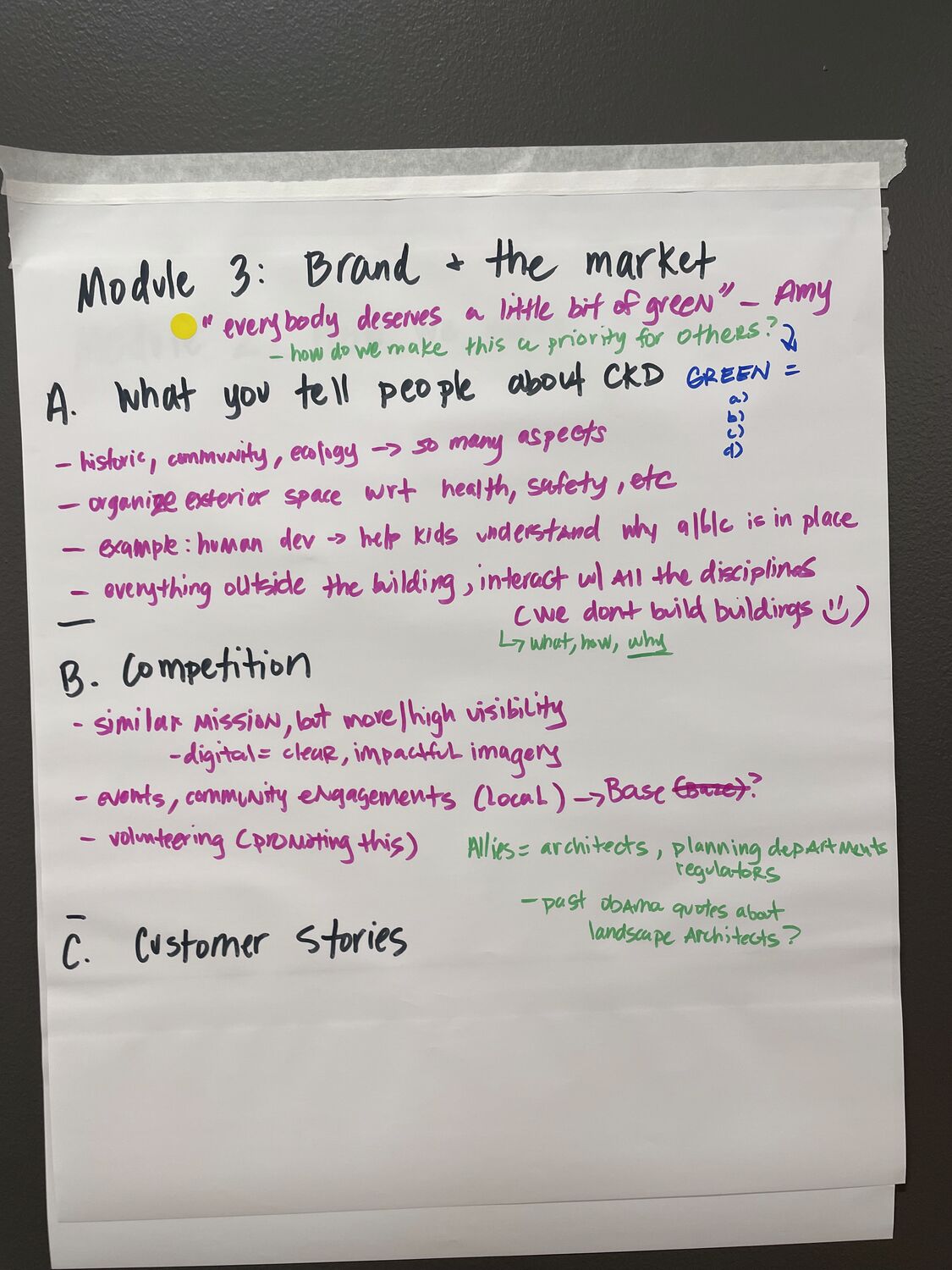
"Everybody deserves a little bit of green."
The line of the afternoon. It went on the brand board and the room marked it to keep. Written underneath it, in the same hand, is the question that turns it from a sentiment into a business problem: how do we make this a priority for other people?
Someone said it, someone else drew an arrow to "there's someone looking out for you," and it stayed on the board. It explains the value of the work without requiring the listener to already know what landscape architecture is, which is the problem every single person in the room described.
Every version of the answer landed here eventually. Everything outside the building. Everything not inside. And, with a smiley face beside it on the board, we don't build buildings. It is the plainest definition available and it beats anything we could write for you.
Community appeared on four boards. When people talked about what made them proud, almost nobody talked about how a project looked. They talked about who used it. Monty, on a shopping centre in Concord: "there were play areas there that you didn't have to go shopping to enjoy. You could use it just as part of the community without shopping."
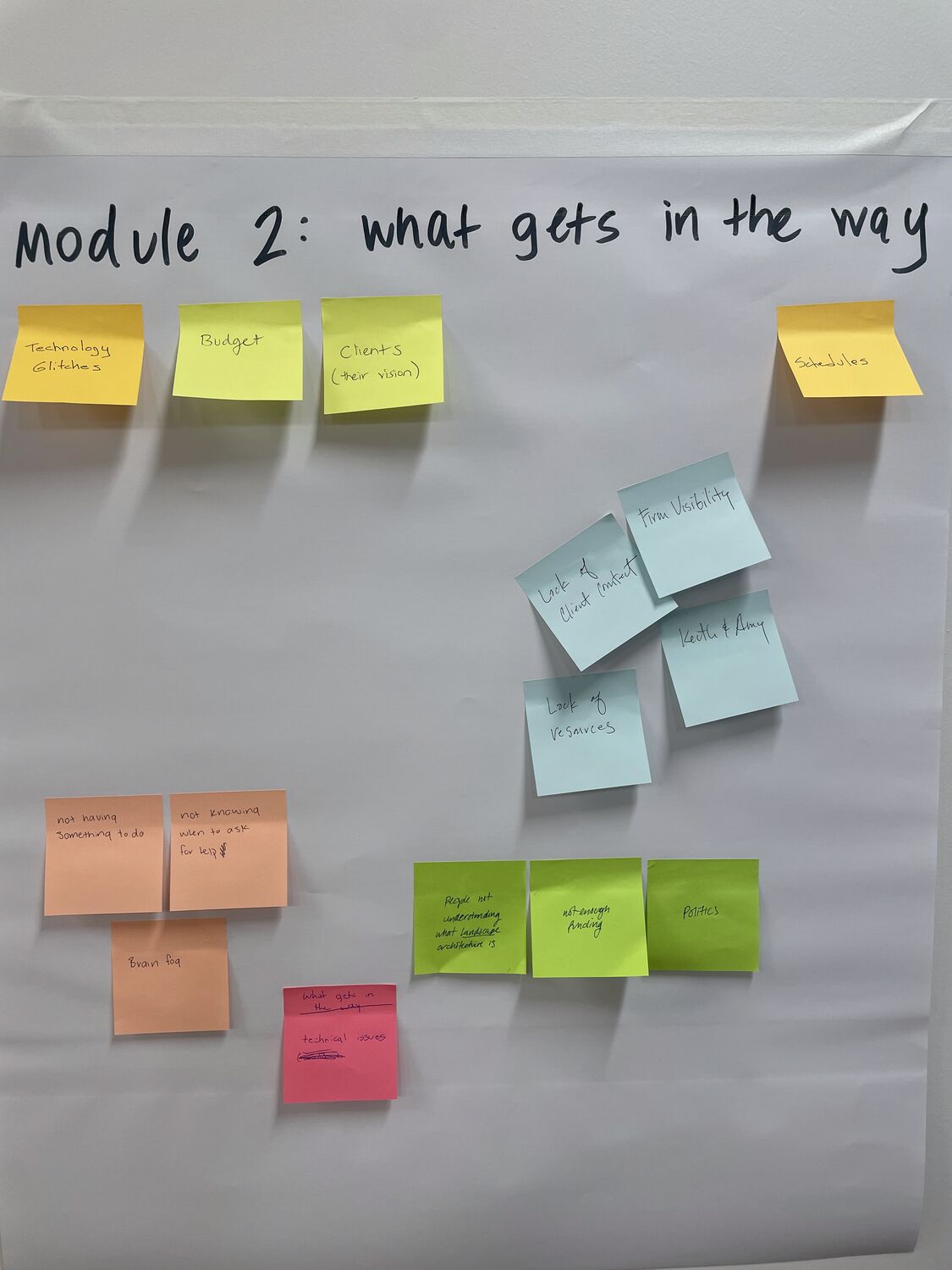
Firm visibility went up as an obstacle, and the read on other firms was consistent: a similar mission, but far easier to find. Mark put it plainly: "they just have more visibility and they just know more people, and they have very similar missions." That is a solvable problem, and it is the one we are most interested in.
Your six zones, in your own words, exactly as they came off the boards.
AmyCommunities of all types. Healthcare, higher ed and schools, hospitality, multi-family. "Every project is community, whether it is hotel clientele or a park and neighbourhood community, or streetscape or school."
KeithDevelopers, cities and architects, each marked today and future.
TeamBay Area communities. Underserved communities. The project lead, meaning whoever funds it.
AmyExpertise in the design of the spaces outside of buildings. Community gathering spaces.
KeithUrban planning in future. Multi-family and parks and recreation, today and future.
TeamDesign concepts, construction documents, public spaces that are functional and resilient, client peace of mind.
AmyPeople not understanding what landscape architecture is. Not enough funding. Politics.
KeithFirm visibility. Lack of direct client contact. Lack of resources.
TeamBudget, schedules, clients and their vision, technology, and knowing when to ask for help.
Three more zones were on the wall: how work comes in, how you make money, and who does what. Those took much longer to fill, and that gap is itself worth noticing. The zones about the work filled in minutes. The zones about the business needed pulling. It is the most common pattern we see in studios that are excellent at what they make, and it is usually why marketing never quite gets an owner.
Idea to execution. Client confidence. Flexibility. Learning. Experimentation. Big ideas. Design with a message, which the room broke into being heard, being subtle, purpose, culture, and the people actually using the space. Pride. Tangible projects you can visit rather than work spread nationwide you never see. Making a difference. Beauty of details. Meeting client needs. Contribution to community. Value to society. A chance to learn and lead. Local city and communities.
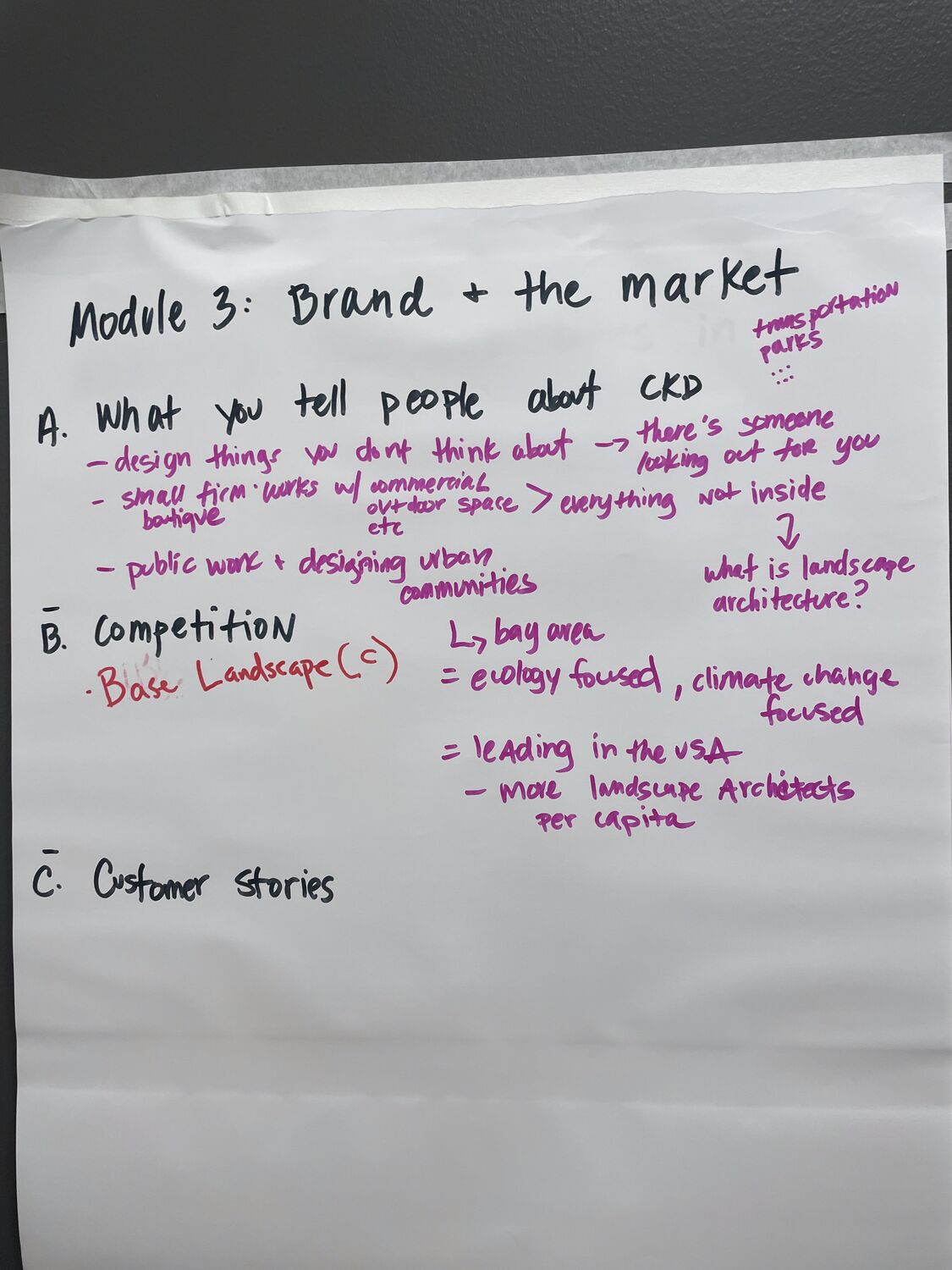
Historic, community and ecology, so many aspects at once. Organising exterior space around health and safety. Helping children understand why a space is laid out the way it is. Everything outside the building, interacting with all the disciplines, and we do not build buildings. Designing the things you do not think about, so there is someone looking out for you. A small boutique firm working with commercial outdoor space. Public work and designing urban communities. Transportation and parks.
Other firms with a similar mission but higher visibility. Clear and impactful digital imagery. Events and local community engagement. Visible volunteering. Allies named as architects, planning departments and regulators, with Monty adding that the regulations themselves are an ally as shade tree requirements and entitlements become more favourable. The Bay Area as ecologically focused, leading in the country, with more landscape architects per capita than almost anywhere.
All six boards as they were when we left. Tap any of them for full size.
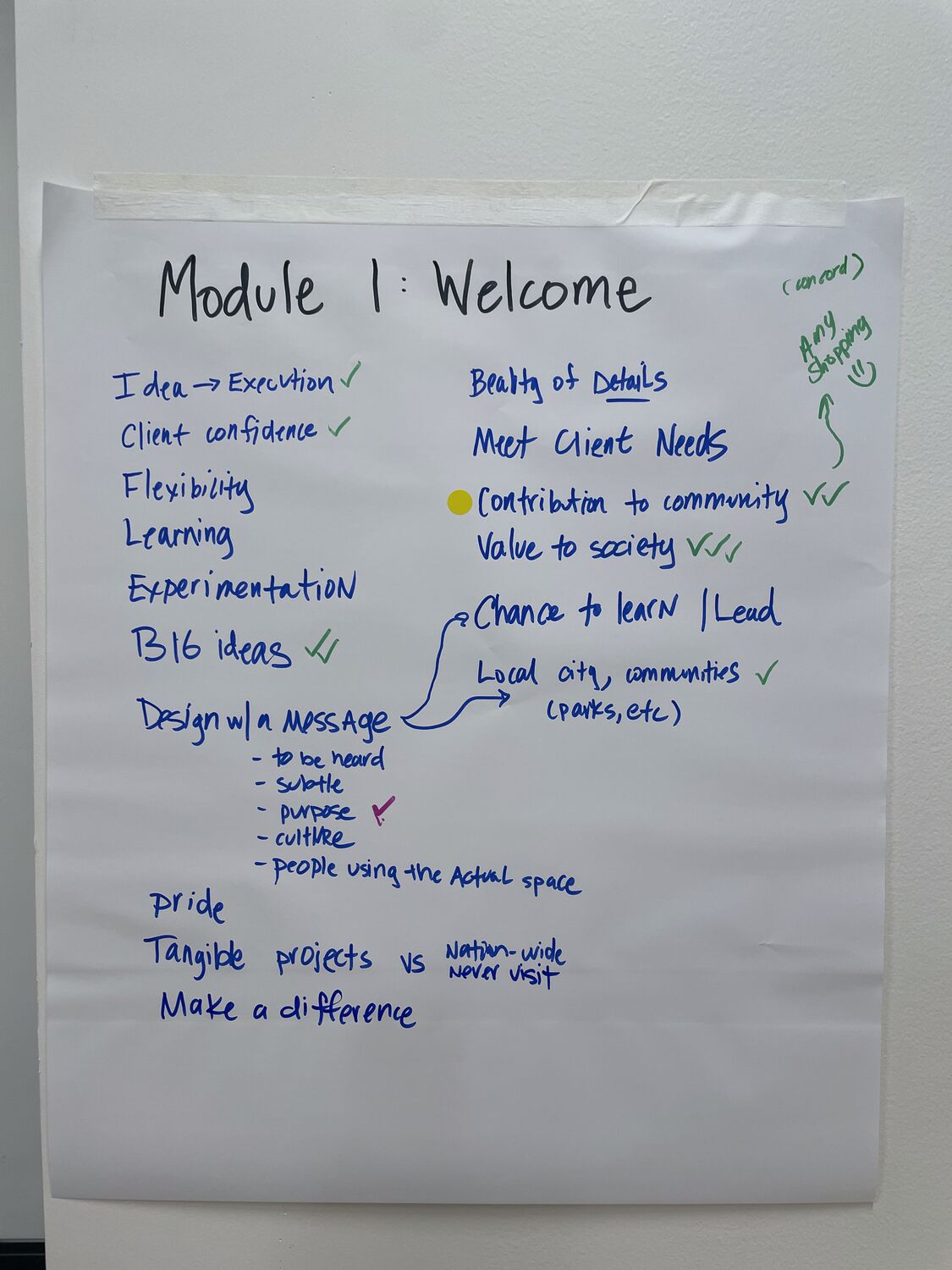
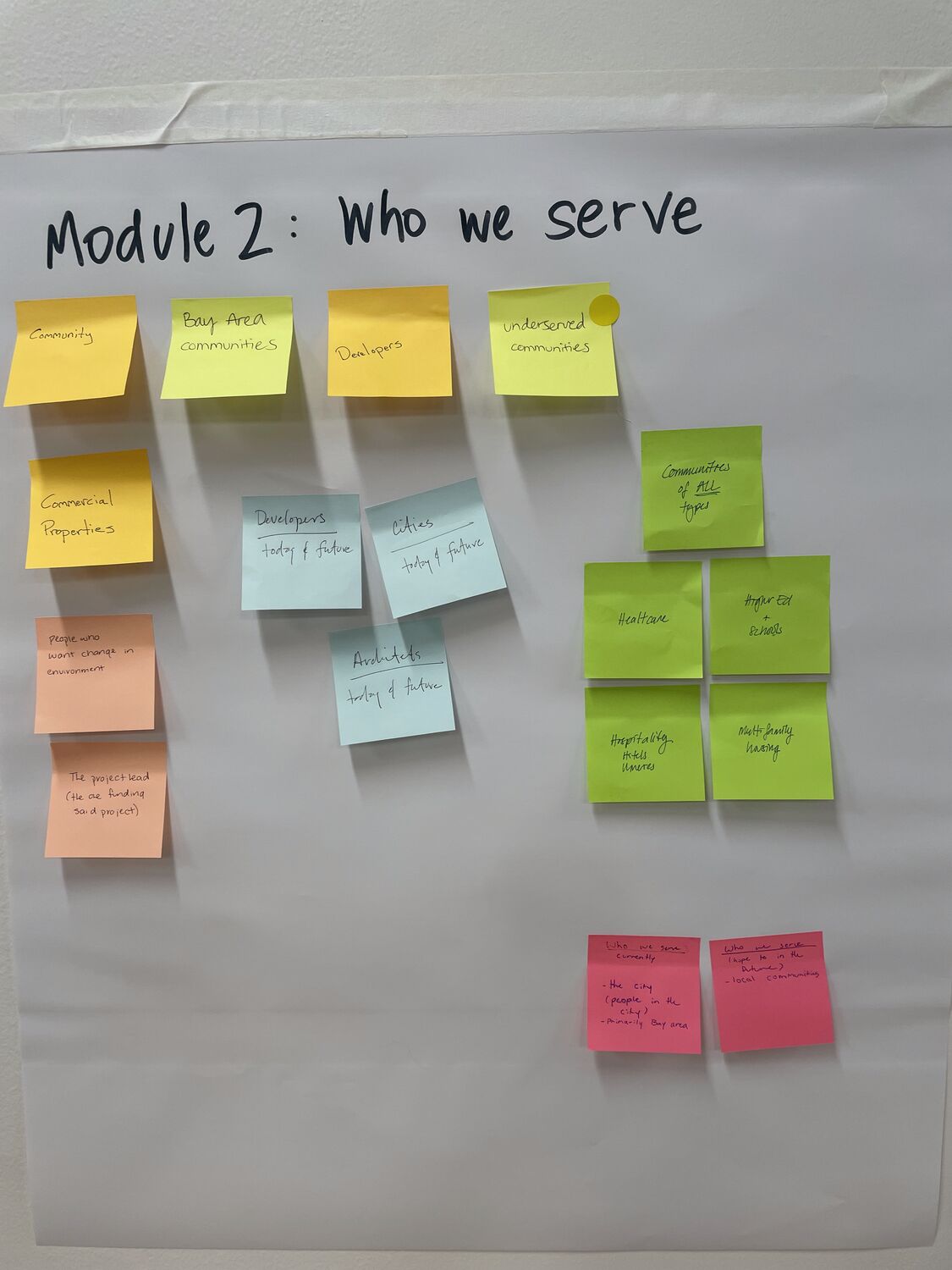
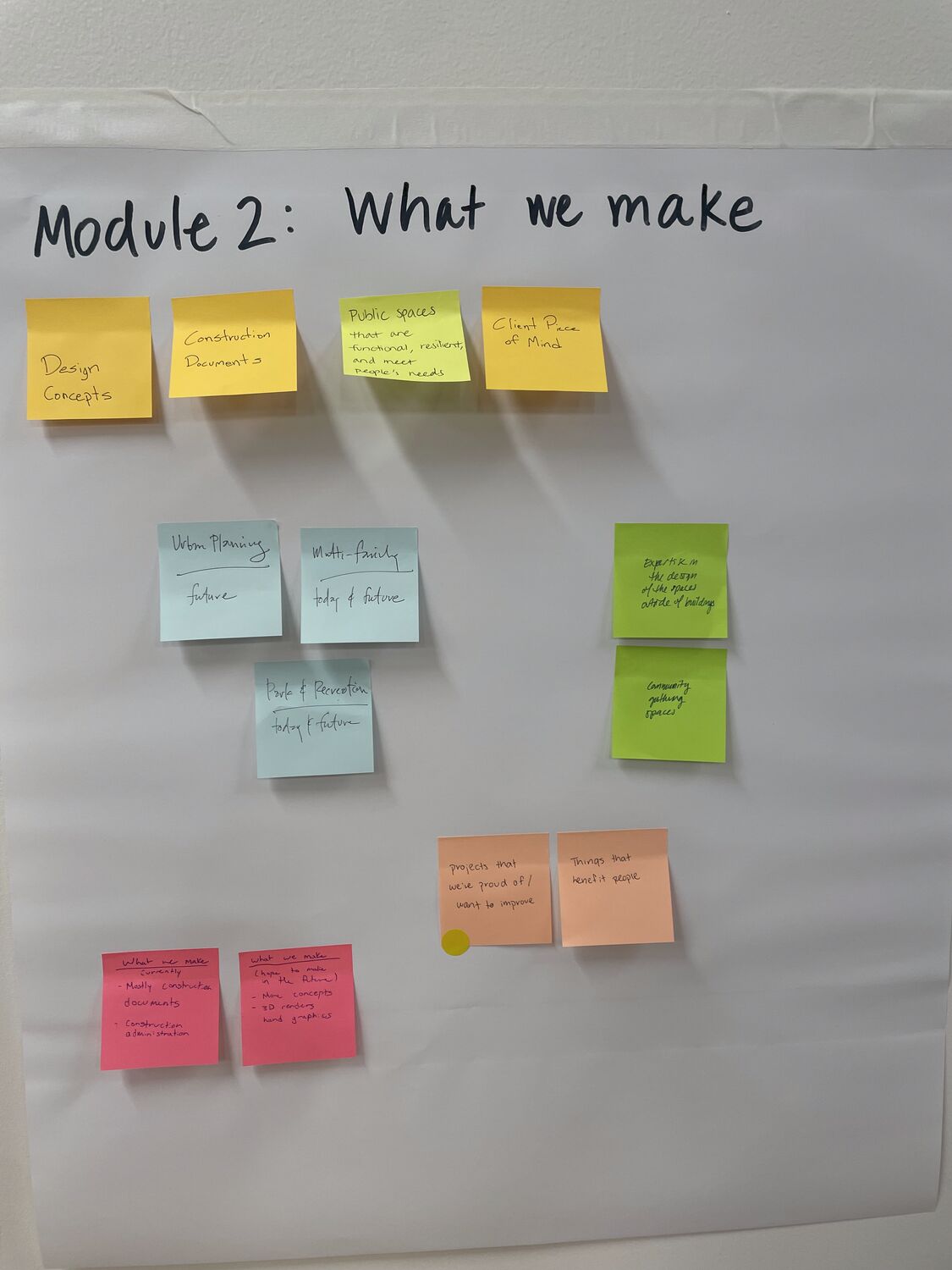
Pulled from every board. The larger ones came up on three or more.
Worth noticing what is not there. Very little of this is the language of craft or of design awards. Almost all of it is about what the work does for people. That is unusual for a design studio, and it is worth building on rather than smoothing away.
Drafts, not recommendations. Every one is stitched from words already on your wall or already on your website. We would rather you argued with them than agreed with them.
Both are quick, and both make what we bring back significantly better.
We reached this section and the clock beat us, so the board is still blank. We are not after formal testimonials. We want the thing a client said on a call that stuck with you, or the reason somebody gave for choosing CKD over another firm. Two or three between you is plenty. Nobody needs to write anything long. This is the only input we have none of.
Somebody started a list on the board defining green and left four blanks underneath it. If everybody deserves a little bit of green is going to carry weight, green needs to mean something specific rather than something pleasant. Four short answers from the room would close it.
The brand platform is written and sits alongside this page. The rest follows quickly.
The positioning, the words, and how to talk about CKD to four different audiences. Written and ready for you to react to. Read it here.
A 90-day activation roadmap, a refresh of the highest-visibility pages, the LinkedIn company page, and a starter batch of posts so the feed keeps moving without adding to anyone's plate.
To play the brand back, put it in everyone's own words, and hand over the plan. It is the last thing we need the team for, and it is the part where the six answers become one.
Everything here points at it. That is the deadline we are designing backwards from, and Amy has already told us she wants a party.
One last thing, and we mean it. A studio where the newest person will say out loud what they have not figured out yet, in front of the two people who run the place, is not a normal studio. That came from Amy and Keith, and it is the reason this afternoon produced anything worth reading. Thank you for the time, and for the honesty.